
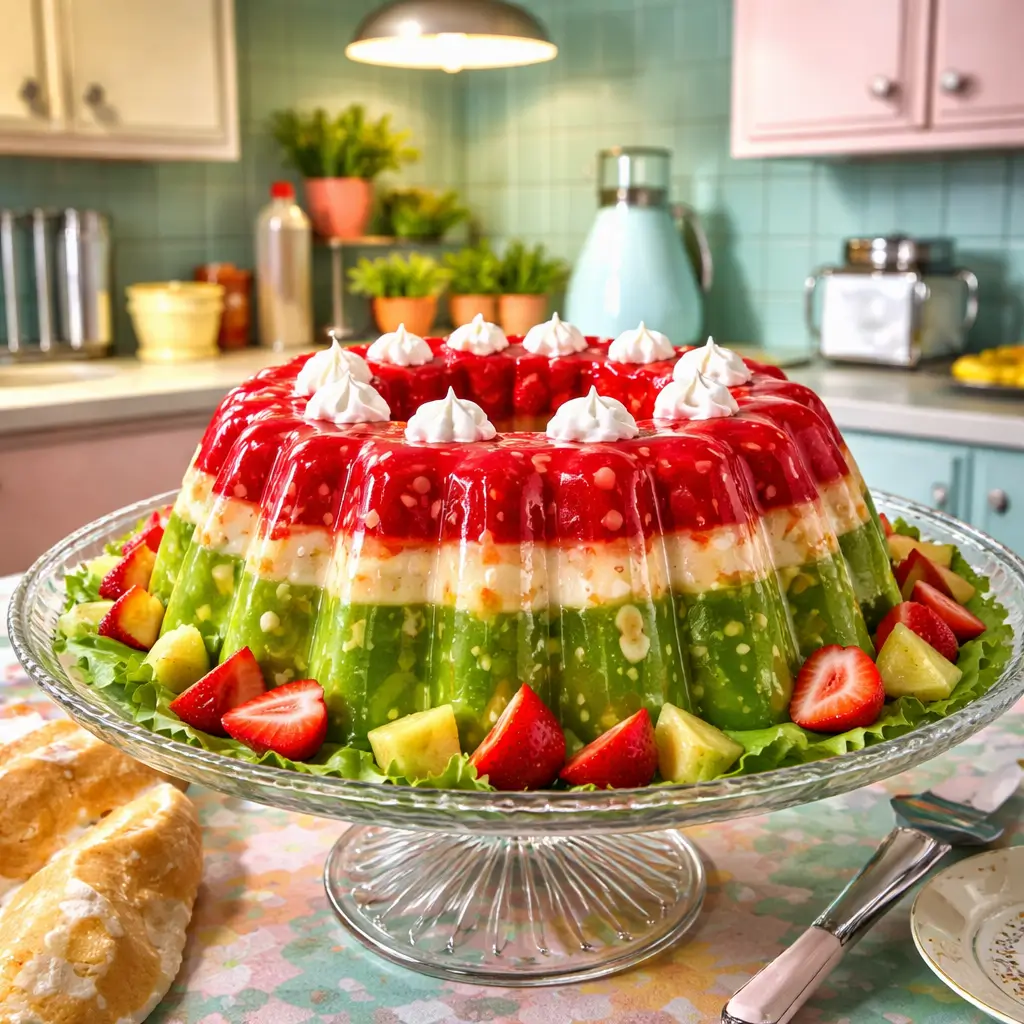
jello mold recipes 1960s capture a uniquely American moment in culinary history when shimmering gelatin salads, layered desserts, and elaborate ring molds took center stage at family dinners, church potlucks, and holiday gatherings. In kitchens across the United States, home cooks embraced convenience foods with enthusiasm, transforming boxed gelatin into colorful centerpieces that reflected both creativity and postwar optimism. These molded creations were more than side dishes or desserts; they were conversation starters, proudly displayed on pressed glass platters and served with a sense of occasion.
jello mold recipes 1960s remain popular today because they combine nostalgia with practicality. They’re surprisingly versatile, affordable, and adaptable to modern tastes while still preserving their vintage charm. Whether you’re recreating a classic lime gelatin salad with canned fruit, a creamy strawberry pretzel mold, or a savory aspic packed with vegetables, these recipes offer a window into mid century American entertaining.
In this guide, you’ll discover what made these molds iconic, how to replicate their signature texture and shape, and how to update them using ingredients readily available in U.S. grocery stores today. From authentic preparation techniques to foolproof unmolding tips, you’ll learn how to bring these retro favorites back to life with confidence and style.
Curious why the Dr. Oz pink gelatin trick is getting so much attention and what it really involves? Click below to discover how it’s made and what you need to know before trying it Dr. Oz Pink Gelatin Trick Recipe What You Need to Know
What Were Jello Molds in the 1960s?
jello mold recipes 1960s were molded gelatin dishes made in decorative pans, typically shaped like rings, crowns, flowers, or fluted domes. These dishes could be sweet, savory, creamy, or fruit filled, and they were often served chilled as either a side dish or dessert. Unlike modern gelatin cups, jello mold recipes 1960s were designed to be dramatic centerpieces. The mold itself usually aluminum, copper, or glass played a key role in presentation, creating intricate ridges and patterns once unmolded onto a platter.
During the 1960s in the United States, convenience foods symbolized progress. Refrigerators were standard in American homes, and boxed flavored gelatin was inexpensive and widely available in grocery stores. As a result, jello mold recipes 1960s became a staple for busy homemakers who wanted to impress guests without spending hours in the kitchen. Cookbooks and brand pamphlets promoted everything from lime gelatin with shredded carrots to layered strawberry banana dessert molds topped with whipped cream.
These molds often combined unexpected ingredients cottage cheese, mayonnaise, canned pineapple, marshmallows, celery, and even seafood in savory versions known as aspics. The goal wasn’t subtlety; it was visual appeal and texture contrast. A well made mold had a firm but tender set, suspended mix ins evenly distributed throughout, and a glossy surface that released cleanly from the pan. Understanding these characteristics is essential before recreating authentic jello mold recipes 1960s in your own kitchen.
Why Jello Mold Recipes 1960s Became So Popular
jello mold recipes 1960s became wildly popular because they reflected the social and cultural shifts happening in postwar America. During this decade, convenience and efficiency were highly valued in home kitchens. Packaged foods symbolized modern living, and gelatin desserts required minimal cooking skills while still delivering impressive presentation. For busy households, jello mold recipes 1960s offered a reliable way to prepare visually striking dishes with very little hands on time.
Another reason jello mold recipes 1960s gained traction was their affordability. A single box of flavored gelatin could feed several people, and mix ins such as canned fruit, crushed pineapple, or mini marshmallows were inexpensive and widely available in U.S. grocery stores. This made molded gelatin dishes ideal for potlucks, church dinners, baby showers, and holiday gatherings where feeding a crowd mattered. Hosts appreciated that jello mold recipes 1960s could be prepared in advance and stored in the refrigerator until serving time.
Presentation also played a major role. Decorative molds created elegant shapes that felt special without requiring advanced baking skills. A bright lime ring filled with suspended fruit slices instantly elevated a table setting. Even savory jello mold recipes 1960s such as tomato aspic or shrimp molds became symbols of refined entertaining. The glossy finish, vibrant colors, and sculpted patterns made these dishes unforgettable. That strong visual appeal continues to draw modern home cooks back to authentic jello mold recipes 1960s today.
Classic Ingredients Used in Jello Mold Recipes 1960s
jello mold recipes 1960s relied on a specific set of pantry staples that defined their flavor, texture, and appearance. Boxed flavored gelatin formed the base of most jello mold recipes 1960s, with popular options including lime, strawberry, orange, cherry, and lemon. Home cooks dissolved the powder in boiling water, added cold water or juice, and then incorporated mix ins before chilling. The result was a firm yet jiggly structure that held its shape beautifully when unmolded.
jello mold recipes 1960s often included canned fruits because they were affordable, shelf stable, and available year round in American supermarkets. Crushed pineapple, fruit cocktail, mandarin oranges, and maraschino cherries were especially common in jello mold recipes 1960s. Some recipes added bananas or fresh apples, though canned fruit was preferred for consistent texture. The syrup from canned fruit was sometimes used in place of part of the cold water to enhance sweetness and flavor.
jello mold recipes 1960s also featured creamy and savory additions that may surprise modern cooks. Cottage cheese, whipped topping, sour cream, mayonnaise, and even cream cheese were folded into certain jello mold recipes 1960s to create layered or opaque effects. In savory versions, shredded carrots, celery, olives, shrimp, or canned tuna were suspended in tomato or lemon gelatin. These combinations reflected the adventurous spirit of the era and demonstrate how versatile jello mold recipes 1960s truly were.
Essential Tools and Mold Types for Authentic Results
jello mold recipes 1960s depended heavily on the right equipment to achieve their iconic shapes and smooth release. While the gelatin mixture itself was simple, the mold determined the final presentation of jello mold recipes 1960s. Popular options included aluminum ring molds, decorative copper molds, fluted glass bowls, and Bundt style pans. The goal was always the same: create a sculpted centerpiece that looked elegant when turned out onto a serving platter.
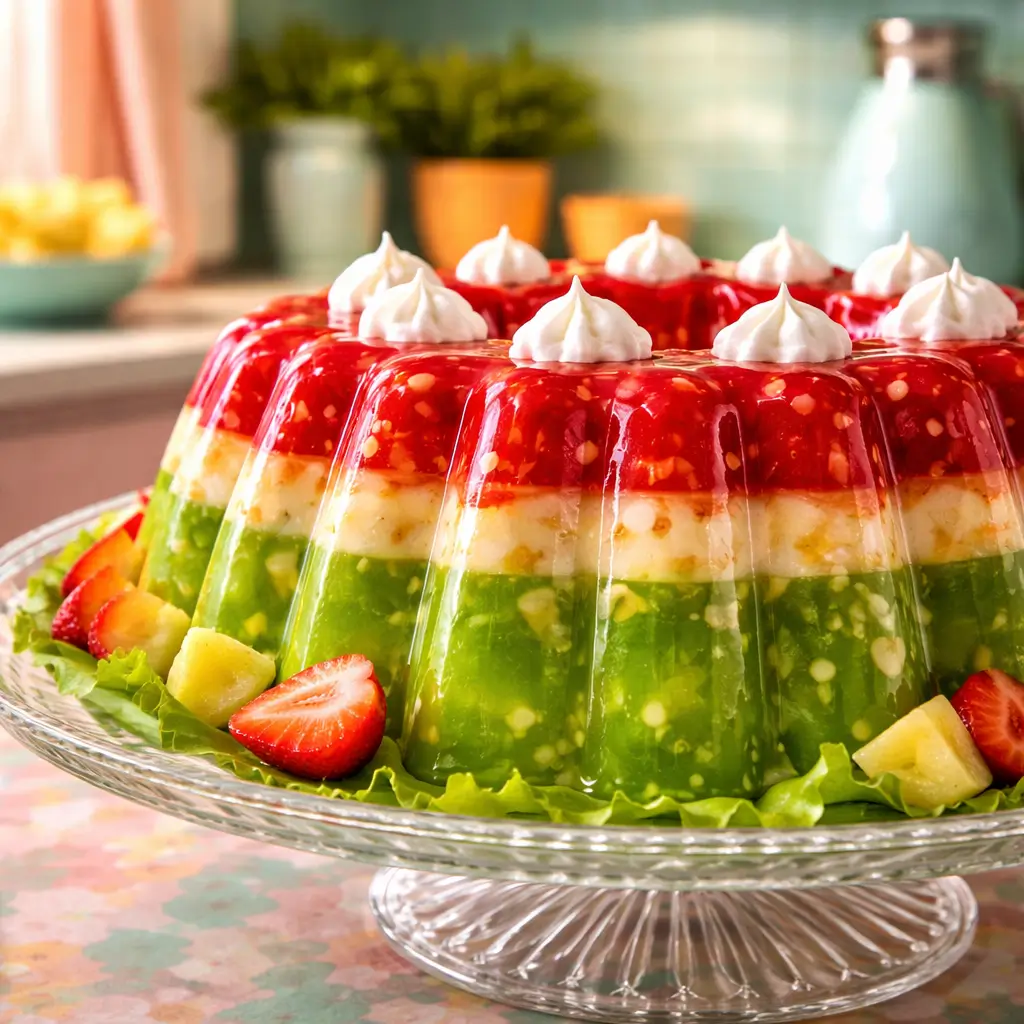
jello mold recipes 1960s were most often prepared in ring molds because the center opening allowed for creative garnishing. Cooks frequently filled the center with lettuce, fresh fruit, or even a small bowl of whipped topping. To help you choose the right mold today, the table below compares traditional mold types used in jello mold recipes 1960s and how they perform in modern kitchens.
| Mold Type | Material | Best For | Release Difficulty | Modern Availability |
|---|---|---|---|---|
| Ring Mold | Aluminum | Sweet or savory gelatin | Moderate | Widely available |
| Decorative Copper | Copper | Formal dessert molds | Moderate to High | Specialty stores |
| Glass Bowl Mold | Tempered Glass | Layered or fruit filled | Easy | Common |
| Bundt Pan | Nonstick Metal | Large party molds | Easy to Moderate | Very common |
jello mold recipes 1960s require proper preparation of the mold before filling. Lightly coating the interior with a thin layer of neutral oil or rinsing with cold water helps the gelatin release cleanly. After chilling fully, dipping the mold briefly in warm water loosens the edges without melting the structure. Mastering this step ensures your jello mold recipes 1960s hold their detailed shape and glossy finish every time.
How to Achieve the Perfect Texture and Set
jello mold recipes 1960s are defined by their signature texture, which should be firm enough to hold shape yet tender enough to jiggle smoothly when sliced. The key to mastering jello mold recipes 1960s lies in understanding the correct gelatin to liquid ratio. Most boxed gelatin in the United States calls for one cup of boiling water and one cup of cold water per three ounce package. For a firmer mold that supports fruit or vegetables, slightly reducing the cold water helps maintain structure.
jello mold recipes 1960s require precise timing when adding mix ins. If fruit or shredded vegetables are added while the gelatin is fully liquid, they will sink to the bottom. To prevent this, allow the mixture to cool until it reaches a syrup like consistency before folding in additions. This technique ensures even suspension, which was a hallmark of well executed jello mold recipes 1960s at mid century gatherings.
jello mold recipes 1960s must chill completely before unmolding. Refrigeration for at least four hours is recommended, though overnight chilling provides the most reliable results. Avoid placing the mold in the freezer, as rapid chilling can cause uneven texture or separation. When properly set, the surface of jello mold recipes 1960s should appear glossy and smooth without bubbles or cracks. Careful attention to temperature, ratio, and patience guarantees the classic texture that makes these retro dishes stand out on any table.
Classic Lime Fruit Salad Jello Mold
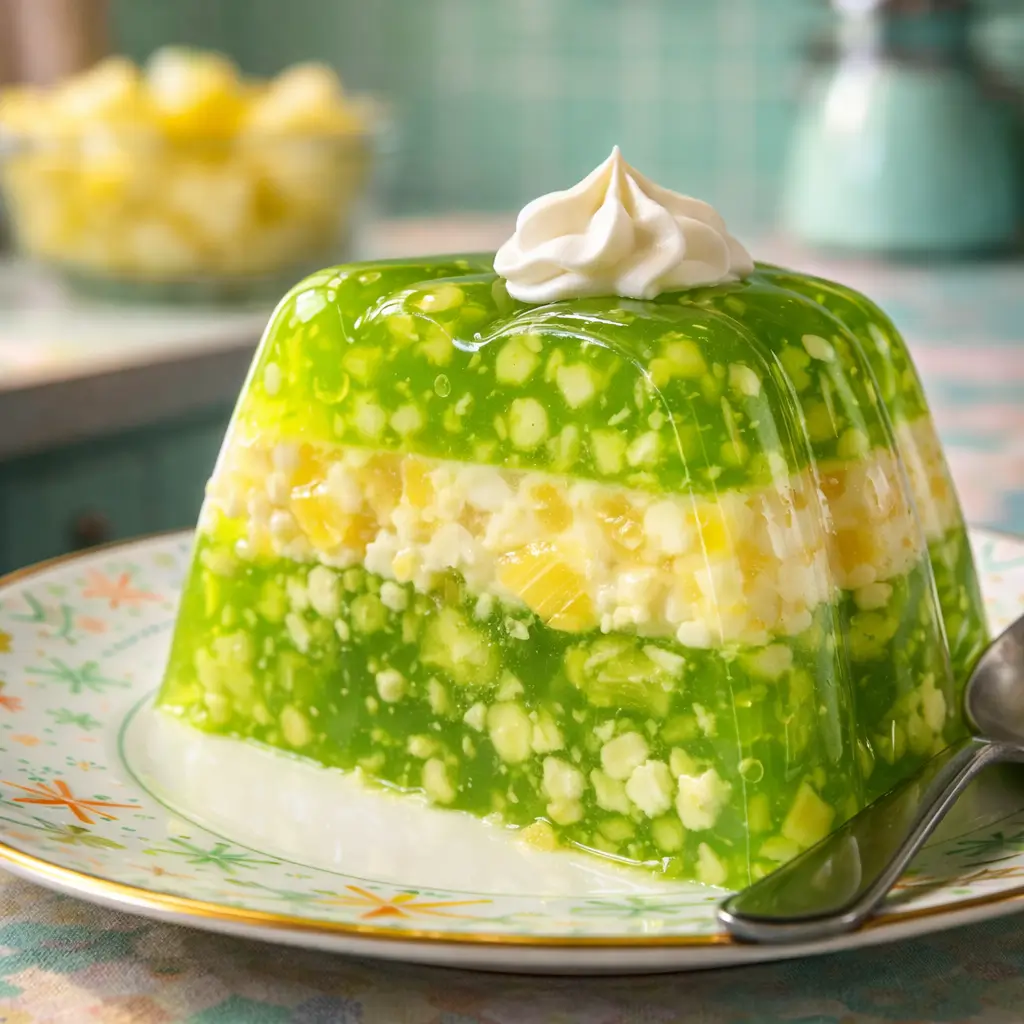
jello mold recipes 1960s often featured lime flavored gelatin as the foundation for sweet and savory salads, and the classic lime fruit salad remains one of the most recognizable examples. Bright green and visually striking, this version of jello mold recipes 1960s was commonly served at Easter, Thanksgiving, and church potlucks across the United States. The combination of citrus flavor and canned fruit created a refreshing contrast that balanced heavier main dishes.
jello mold recipes 1960s like this one typically included crushed pineapple, cottage cheese, and chopped nuts for added texture. Below is an authentic style recipe adapted for modern kitchens while preserving the spirit of traditional jello mold recipes 1960s.
Ingredients
• 1 package lime flavored gelatin, 3 ounces
• 1 cup boiling water
• 1 cup cold water
• 1 cup crushed pineapple, well drained
• 1 cup small curd cottage cheese
• 1 half cup chopped pecans
• 1 half cup whipped topping
Instructions
- Dissolve the gelatin completely in boiling water.
- Stir in cold water and allow the mixture to cool until slightly thickened.
- Fold in pineapple, cottage cheese, pecans, and whipped topping.
- Pour into a lightly prepared ring mold.
- Refrigerate at least four hours or overnight.
- Dip mold briefly in warm water and invert onto a serving plate.
jello mold recipes 1960s like this lime salad are best served chilled with crisp lettuce leaves or additional whipped topping in the center of the ring. The result is creamy, lightly sweet, and unmistakably nostalgic.
Strawberry Pretzel Style Dessert Mold
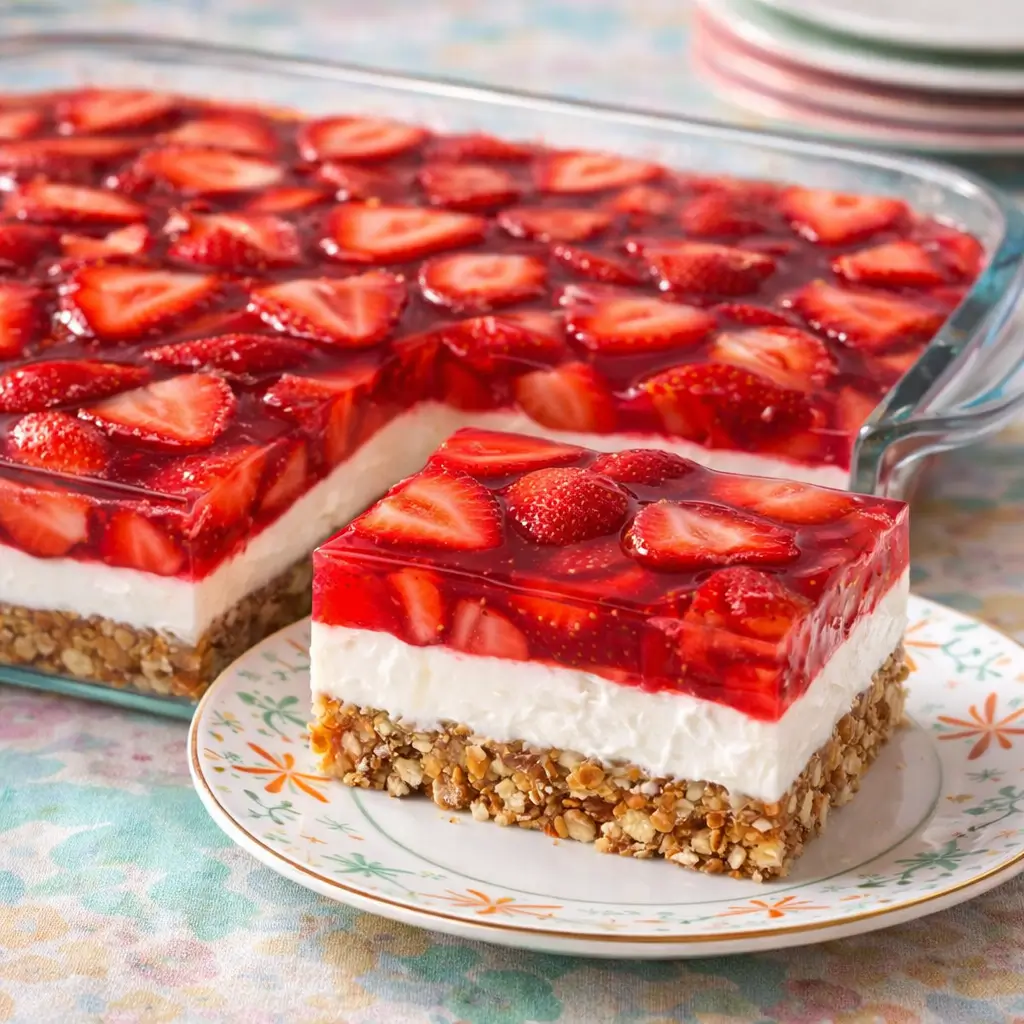
jello mold recipes 1960s were not limited to simple fruit suspensions. Many families embraced layered desserts that combined crunchy textures with creamy fillings, and strawberry pretzel style molds became a beloved variation of jello mold recipes 1960s in American households. While technically closer to a layered gelatin dessert than a traditional suspended salad, this retro favorite reflects the creative spirit that defined jello mold recipes 1960s during potlucks and holiday celebrations.
jello mold recipes 1960s like this one balance sweet, salty, creamy, and fruity elements in a single dish. Below is a classic preparation adapted for modern U.S. kitchens while preserving the nostalgic flavor profile that made jello mold recipes 1960s memorable.
Ingredients
For the crust
• 2 cups crushed salted pretzels
• 3 tablespoons granulated sugar
• 3 quarters cup melted butter
For the cream layer
• 8 ounces cream cheese, softened
• 1 cup granulated sugar
• 8 ounces whipped topping
For the gelatin layer
• 1 package strawberry gelatin, 3 ounces
• 1 cup boiling water
• 1 cup cold water
• 2 cups sliced fresh strawberries
Instructions
- Mix crushed pretzels, sugar, and melted butter. Press into a baking dish and bake at 350 degrees Fahrenheit for 10 minutes. Cool completely.
- Beat cream cheese and sugar until smooth, then fold in whipped topping. Spread evenly over the cooled crust, sealing edges completely. Chill 30 minutes.
- Dissolve gelatin in boiling water, stir in cold water, and cool slightly. Add strawberries and pour gently over the cream layer.
- Refrigerate at least four hours before slicing.
jello mold recipes 1960s like this dessert are best served chilled and cut into squares for easy sharing at gatherings.
Savory Tomato Aspic Mold
jello mold recipes 1960s were not always sweet, and one of the most iconic savory versions was tomato aspic. Served as a chilled appetizer or side dish, tomato based jello mold recipes 1960s reflected the mid century fascination with molded salads that paired vegetables, herbs, and even seafood with gelatin. These savory molds often appeared at luncheon parties, bridal showers, and formal dinners across the United States.
jello mold recipes 1960s like tomato aspic relied on tomato juice or condensed tomato soup as the flavor base. Unflavored gelatin was typically used instead of sweetened boxed varieties, allowing cooks to control seasoning. The texture needed to be firm yet sliceable, making correct gelatin ratios especially important in savory jello mold recipes 1960s.
Below is an authentic style tomato aspic recipe adapted for modern kitchens:
Ingredients
• 2 cups tomato juice
• 1 tablespoon unflavored gelatin
• 1 quarter cup cold water
• 2 tablespoons lemon juice
• 1 half cup finely chopped celery
• 1 half cup grated carrots
• 2 tablespoons finely minced onion
• 1 teaspoon Worcestershire sauce
• Salt and black pepper to taste
Instructions
- Sprinkle gelatin over cold water and let stand five minutes.
- Heat tomato juice gently and stir in softened gelatin until fully dissolved.
- Add lemon juice, Worcestershire sauce, salt, and pepper.
- Allow mixture to cool until slightly thickened.
- Fold in celery, carrots, and onion.
- Pour into a prepared mold and refrigerate until firm, at least four hours.
jello mold recipes 1960s like tomato aspic are traditionally served on crisp lettuce leaves with a dollop of mayonnaise or sour cream for authentic presentation.
Ingredient Substitutions for Modern Kitchens
jello mold recipes 1960s can be recreated authentically, but modern home cooks often prefer updated ingredients that align with today’s tastes and dietary preferences. While the original jello mold recipes 1960s relied heavily on canned fruit, processed whipped toppings, and sweetened gelatin, you can make thoughtful substitutions without losing the nostalgic character of these dishes.
jello mold recipes 1960s traditionally used canned pineapple or fruit cocktail packed in syrup, yet fresh fruit works beautifully when properly prepared. For example, fresh strawberries, blueberries, or mandarin oranges can replace canned versions, as long as they are well drained. Avoid fresh pineapple or kiwi in jello mold recipes 1960s unless they are cooked first, since their natural enzymes can prevent gelatin from setting. Using 100 percent fruit juice instead of cold water can also enhance flavor while reducing added sugars.
jello mold recipes 1960s frequently included whipped topping or mayonnaise for creaminess. Today, you can substitute freshly whipped heavy cream stabilized with a small amount of powdered sugar, or use plain Greek yogurt for a tangy twist in creamy salads. Reduced sugar gelatin products available in U.S. grocery stores also work well if you prefer lighter options. The table below highlights smart ingredient swaps that maintain structure while updating flavor.
| Traditional Ingredient | Modern Substitute | Why It Works |
|---|---|---|
| Canned fruit in syrup | Fresh fruit, well drained | Brighter flavor, less sugar |
| Whipped topping | Fresh whipped cream | Cleaner taste, fewer additives |
| Mayonnaise | Greek yogurt | Lighter texture, tangy note |
| Full sugar gelatin | Reduced sugar gelatin | Lower calorie option |
jello mold recipes 1960s remain flexible and adaptable, allowing you to honor tradition while tailoring flavors for contemporary gatherings.
Serving, Presentation, and Storage Tips
jello mold recipes 1960s were designed to be the visual centerpiece of the table, so presentation plays a crucial role in recreating their authentic appeal. Traditionally, jello mold recipes 1960s were unmolded onto pressed glass platters or cake stands to highlight their sculpted ridges and glossy surface. For a classic look, place crisp lettuce leaves, fresh fruit slices, or a small bowl of whipped cream in the center of a ring mold. The contrast in color and texture enhances the nostalgic charm that defines jello mold recipes 1960s.
jello mold recipes 1960s should always be served thoroughly chilled to maintain structure and clean slices. Use a sharp knife dipped in warm water and wiped dry between cuts to achieve smooth edges. If transporting jello mold recipes 1960s to a potluck or gathering, keep them in a cooler with ice packs and unmold at the destination for best results. Stability during travel prevents shifting or cracking.
jello mold recipes 1960s store well when covered tightly with plastic wrap and refrigerated. Most sweet molds stay fresh for up to three days, while savory versions are best enjoyed within two days due to vegetable moisture. Avoid freezing jello mold recipes 1960s, as freezing can cause weeping and texture breakdown once thawed. Proper storage ensures your retro creation maintains its glossy finish and firm consistency until serving time.
Nutritional Overview and Portion Guidance
Gelatin molds from the 1960s were originally celebrated for convenience and presentation rather than nutrition, yet understanding their nutritional profile helps modern home cooks make informed choices. Many vintage recipes relied on added sugars from flavored gelatin, canned fruit syrup, and whipped toppings. Savory versions could include sodium from tomato juice, canned vegetables, or seasoning sauces. While these ingredients reflected the food culture of the era, today’s cooks often prefer balanced portions and thoughtful adjustments.
Calorie content varies widely depending on whether the dish is fruit based, creamy and layered, or savory. A simple fruit gelatin mold typically ranges from 120 to 180 calories per serving. Cream layered desserts can reach 250 to 350 calories per slice due to butter, cream cheese, and sugar. Savory tomato based molds are generally lower in calories but may contain moderate sodium levels. The table below offers a general nutritional comparison per average serving.
| Type of Mold | Approx Calories | Sugar Content | Sodium Level |
|---|---|---|---|
| Fruit Gelatin Mold | 150 | Moderate | Low |
| Creamy Layered Dessert | 300 | High | Low |
| Savory Tomato Aspic | 120 | Low | Moderate |
These dishes can fit into modern meal planning when served in moderate portions alongside balanced foods such as lean proteins and fresh vegetables. Choosing reduced sugar gelatin, fresh fruit, and lighter dairy options allows you to enjoy vintage favorites while aligning with current nutritional preferences and dietary goals.
Conclusion
jello mold recipes 1960s reflect a distinctive era of American cooking that celebrated creativity, convenience, and bold presentation. From sweet lime fruit salads to savory tomato aspic, these molded dishes once defined party tables and holiday spreads across the United States. Today, jello mold recipes 1960s offer more than nostalgia.
They provide an opportunity to recreate vintage flavors while adapting ingredients to modern tastes and dietary preferences. With proper technique, thoughtful substitutions, and careful chilling, anyone can master jello mold recipes 1960s and bring retro charm back to the table. Whether you are hosting a themed gathering or simply exploring classic American cuisine, these timeless gelatin creations continue to shine.
Frequently Asked Questions About jello mold recipes 1960s
What are jello mold recipes 1960s made of?
jello mold recipes 1960s are typically made from flavored gelatin dissolved in hot water and combined with cold water, juice, fruit, vegetables, or creamy ingredients. Sweet versions often include canned fruit, whipped topping, or cottage cheese, while savory variations may use tomato juice, herbs, and chopped vegetables. The mixture is poured into a decorative mold and chilled until firm before serving.
Why were jello mold recipes 1960s so popular in America?
jello mold recipes 1960s became popular because they were affordable, visually impressive, and easy to prepare. During the 1960s, convenience foods symbolized modern living. Refrigeration was common in U.S. homes, and boxed gelatin products allowed families to create elegant dishes without advanced cooking skills.
How long do jello mold recipes 1960s need to set?
Most jello mold recipes 1960s require at least four hours of refrigeration to set properly. For best results, chilling overnight ensures a firm structure and clean unmolding. Avoid freezing, as it can damage the texture.
Why won’t my jello mold set properly?
jello mold recipes 1960s may fail to set if the liquid ratio is incorrect or if fresh pineapple or kiwi is added without cooking. These fruits contain enzymes that break down gelatin. Always measure liquids carefully and use canned or cooked fruit when needed.
Can I make jello mold recipes 1960s with fresh fruit?
Yes, jello mold recipes 1960s can include fresh fruit such as strawberries, blueberries, or oranges. Make sure the fruit is well drained and added when the gelatin is slightly thickened to prevent sinking.
What is the best mold to use for jello mold recipes 1960s?
Ring molds, fluted metal pans, and glass bowls are ideal for jello mold recipes 1960s. Nonstick Bundt pans also work well in modern kitchens. Proper preparation ensures clean release.
How do you unmold jello mold recipes 1960s cleanly?
To unmold jello mold recipes 1960s, dip the mold briefly in warm water for five to ten seconds. Place a serving plate on top and invert quickly. Gentle shaking helps release the gelatin without breaking it.
Are savory jello mold recipes 1960s still served today?
Savory jello mold recipes 1960s are less common today but remain popular at retro themed gatherings. Tomato aspic and shrimp molds are the most recognizable savory examples.
How long do jello mold recipes 1960s last in the refrigerator?
Most jello mold recipes 1960s stay fresh for two to three days when tightly covered and refrigerated. For best flavor and texture, serve within forty eight hours.
Follow us on Pinterest
jello mold recipes 1960s
Ingredients
Method
- In a mixing bowl, dissolve the lime gelatin completely in 1 cup boiling water, stirring until fully dissolved.
- Stir in 1 cup cold water and allow the mixture to cool until slightly thickened but not fully set.
- Gently fold in the drained crushed pineapple, cottage cheese, whipped topping, and chopped pecans if using.
- Lightly rinse or grease a 6 cup ring mold or Bundt pan.
- Pour the mixture into the prepared mold and smooth the top evenly.
- Refrigerate for at least 4 hours or until fully firm.
- To unmold, dip the bottom of the pan in warm water for 5 to 10 seconds, place a serving plate over the mold, and invert carefully.
- Garnish as desired and serve chilled.
Notes
• Allow the gelatin to cool slightly before adding mix ins so ingredients suspend evenly instead of sinking.
• Do not use fresh pineapple unless it has been cooked, as enzymes can prevent proper setting.
• For a firmer mold suitable for warm weather events, reduce the cold water by 2 tablespoons.