
Learning how to dice a bell pepper is one of those essential kitchen skills that instantly elevates your cooking. Whether you are preparing a quick stir fry, building a fresh salad, or adding vibrant color to a hearty omelet, mastering this simple technique will save you time and improve the texture and presentation of your dishes.
Dicing a bell pepper might seem straightforward, but there is a clear difference between uneven chunks and clean, uniform cubes. Professional chefs rely on precision not only for visual appeal but also for even cooking. When your pieces are consistent in size, they cook at the same rate, ensuring better flavor and texture in every bite.
Why Proper Technique Matters When You Dice a Bell Pepper
Understanding how to dice a bell pepper correctly is more than just a visual upgrade. It directly impacts how your food tastes and cooks.
First, evenly diced bell peppers ensure balanced cooking. Smaller pieces soften faster, while larger chunks can remain undercooked. By maintaining uniform size, you avoid this inconsistency entirely.
Second, presentation plays a significant role, especially if you enjoy plating meals that look as good as they taste. Clean, sharp cuts create a professional appearance, whether you are cooking for yourself or guests.
Third, efficiency in the kitchen improves dramatically when you use the right method. Instead of struggling with seeds, membranes, and awkward angles, a structured approach helps you work faster and cleaner.
Understanding the Structure of a Bell Pepper Before Dicing
Before diving into how to dice a bell pepper, it helps to understand its anatomy. This makes the process easier and more precise.
A bell pepper consists of three main parts:
The outer flesh
This is the edible, crunchy portion that you will be dicing. It is thick, juicy, and naturally sweet.
The core
Located at the top center, the core holds the seeds together. It is firm and inedible.
Seeds and membranes
The seeds are attached to white membranes inside the pepper. While not harmful, they are bitter and should be removed for better flavor and texture.
When you understand how these parts fit together, you can remove unwanted sections quickly and focus only on the usable flesh.
Choosing the Right Bell Pepper for Dicing
Not all bell peppers are created equal when it comes to dicing. Selecting the right one makes the process smoother and the results better.
Look for firm peppers with smooth, shiny skin. Avoid any that feel soft or have wrinkles, as these can be harder to cut cleanly.
Color can also affect flavor. Green bell peppers tend to be slightly bitter, while red, yellow, and orange varieties are sweeter. Your choice depends on the dish you are preparing.
A stable pepper with a flat base is easier to handle, making it safer and more efficient when learning how to dice a bell pepper.
Essential Tools You Need for Perfect Dicing
Having the right tools is just as important as technique.
A sharp chef’s knife is essential. A dull knife will crush the pepper rather than slice it cleanly, leading to uneven pieces and increased risk of slipping.
A sturdy cutting board provides stability. Wooden or plastic boards work best, as they prevent movement while you cut.
Optional but helpful tools include a paring knife for finer trimming and a bowl nearby to discard seeds and cores.
With the right setup, the process becomes faster, safer, and far more enjoyable.
- Craving a rich, savory dip that’s even better than the store-bought favorite? Discover how to make it fresh at home in this guide Deans French Onion Dip Recipe That Tastes Better Homemade.
Step by Step Guide on How to Dice a Bell Pepper Like a Pro
Now that you understand the basics, it is time to master exactly how to dice a bell pepper with precision and confidence. This step by step method is the same approach used in professional kitchens, designed to minimize waste, maximize efficiency, and produce perfectly even cubes every time.
If you have ever struggled with slipping peppers, scattered seeds, or uneven cuts, this method will completely change how you approach how to dice a bell pepper in your daily cooking.
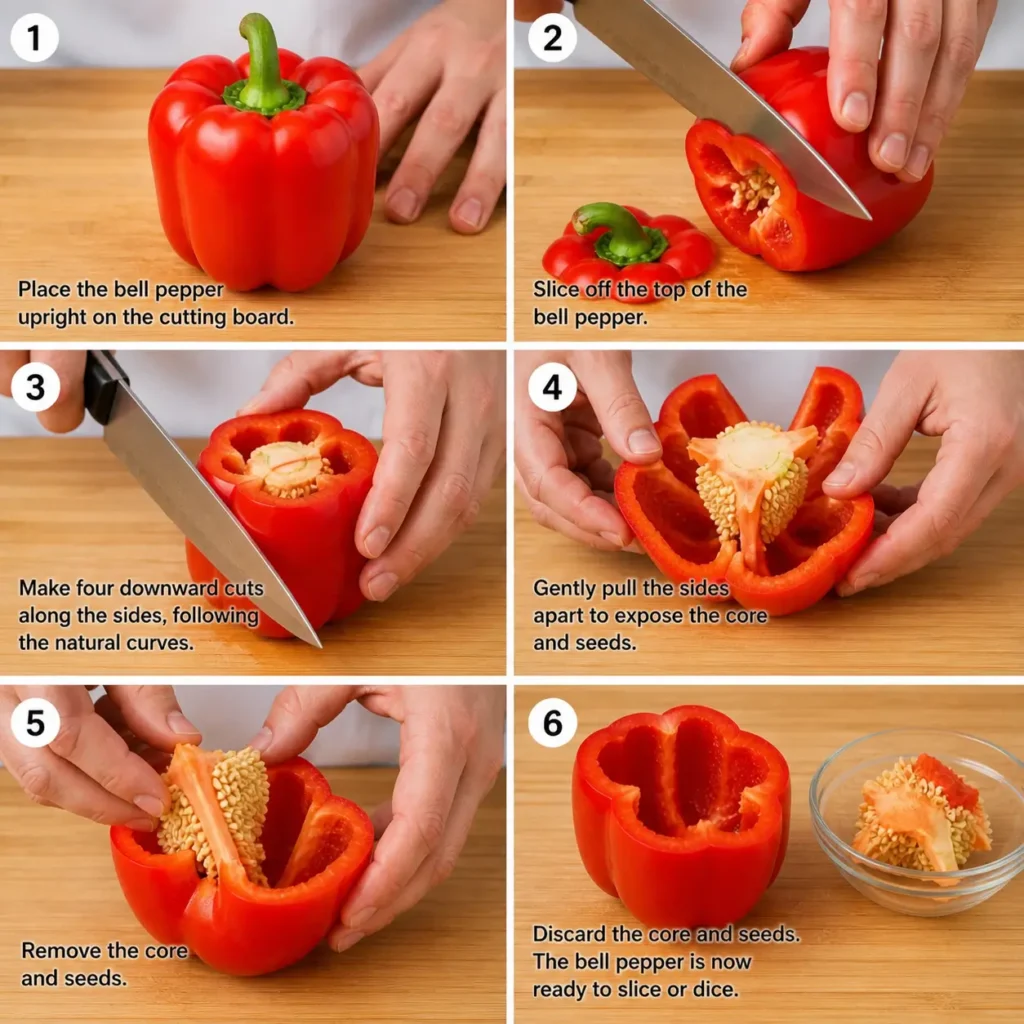
Step 1: Wash and Prepare the Bell Pepper Properly
Before starting how to dice a bell pepper, always rinse it under cool running water. Even if it looks clean, the outer surface can carry dirt or residue.
Dry the pepper thoroughly with a clean towel. A dry surface prevents slipping and gives you better control when learning how to dice a bell pepper safely.
Place the bell pepper on your cutting board with the stem facing upward. This position gives you a clear view of where to begin.
Step 2: Slice Off the Top and Bottom
To begin the actual process of how to dice a bell pepper, use a sharp chef’s knife to slice off the top portion, just below the stem. Then slice off the bottom.
This exposes the inner core and creates flat surfaces, which are essential for stability. Stability is one of the most important factors when mastering how to dice a bell pepper efficiently.
You will now clearly see the seeds and white membranes inside.
Step 3: Remove the Core and Seeds Cleanly
Stand the bell pepper upright and carefully cut downward along the sides, following the natural curves of the pepper. This separates the flesh from the core.
As you work through this step of how to dice a bell pepper, you will notice that the core remains in the center. Discard it along with the seeds.
If any seeds remain on the flesh, gently trim them away with your knife or rinse briefly and pat dry again.
This method keeps the workspace clean and avoids spreading seeds everywhere, which is a common issue when people rush through how to dice a bell pepper.
Step 4: Flatten the Pepper Panels for Easier Cutting
After removing the core, you will have several curved pieces of pepper.
Lay each piece flat on the cutting board, skin side down. Flattening is a key step in mastering how to dice a bell pepper, because it creates a stable surface for precise cuts.
If the pieces are slightly curved, you can gently press them down with your hand to make them more even.
Step 5: Slice into Uniform Strips
Now begin slicing each flattened piece into thin, even strips.
Keep your knife steady and use a smooth, controlled motion. The width of these strips will determine the size of your final dice, so consistency is essential when practicing how to dice a bell pepper correctly.
For most recipes, aim for strips that are about a quarter inch wide. This size works well for stir fries, salads, and sautés.
Step 6: Rotate and Dice into Perfect Cubes
Gather the strips together, rotate them ninety degrees, and begin cutting across them to form small cubes.
This final step completes the full process of how to dice a bell pepper.
Maintain even spacing between each cut to ensure uniform cubes. This not only improves presentation but also ensures even cooking.
At this point, you should have a pile of clean, evenly diced bell pepper pieces ready for any recipe.
Common Mistakes to Avoid When Learning How to Dice a Bell Pepper
Even with a clear method, small mistakes can affect your results when learning how to dice a bell pepper.
One common mistake is using a dull knife. This leads to crushed edges instead of clean cuts, making your dice uneven.
Another mistake is skipping the step of flattening the pepper. Cutting curved surfaces increases the risk of slipping and uneven pieces.
Many beginners also try to cut through the core instead of working around it. This makes the process messy and inefficient.
By avoiding these mistakes, your technique for how to dice a bell pepper will improve quickly.
Pro Tips to Master How to Dice a Bell Pepper Faster
Once you are comfortable with the basics of how to dice a bell pepper, a few professional tips can help you work even faster.
Keep your knife tip slightly anchored to the board while slicing. This creates a smooth rocking motion that increases speed and control.
Work in batches by stacking flattened pieces when possible. This allows you to make multiple cuts at once without sacrificing precision.
Finally, always focus on consistency rather than speed. As your confidence grows, speed will naturally follow while maintaining perfect results in how to dice a bell pepper.
Different Cutting Styles and When to Use Diced Bell Peppers
Once you understand how to dice a bell pepper, the next step is knowing when and why to use this cut compared to other styles. Not every recipe calls for diced peppers, and choosing the right cut can significantly impact texture, flavor distribution, and overall presentation.
Professional cooks do not just learn how to dice a bell pepper. They also understand how this technique fits into a broader set of knife skills that influence the final dish.
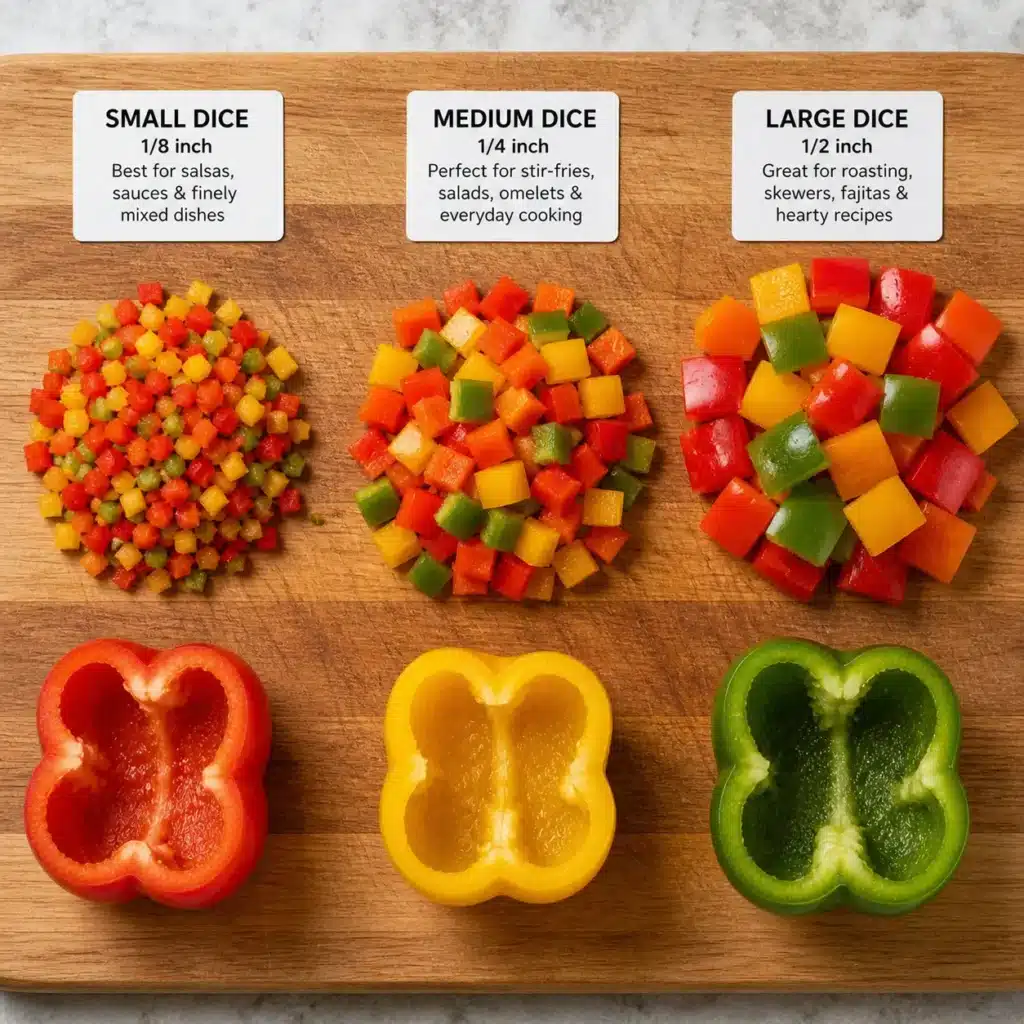
Understanding Dice Sizes for Better Cooking Results
When practicing how to dice a bell pepper, it is important to know that not all dice are the same. The size of your dice should match the cooking method and dish type.
Small Dice
A small dice creates very fine pieces, typically around one eighth inch.
This size is ideal when you want the bell pepper to blend into the dish rather than stand out. It works especially well in sauces, salsas, and fillings where texture should be subtle.
Using a small dice after mastering how to dice a bell pepper ensures even distribution of flavor without overpowering other ingredients.
Medium Dice
A medium dice is about a quarter inch and is the most commonly used size in home cooking.
This is the standard result when most people learn how to dice a bell pepper, and it works for stir fries, omelets, pasta dishes, and grain bowls.
It offers a balance between texture and flavor, making it versatile across many recipes.
Large Dice
A large dice produces bigger cubes, often around half an inch.
This size is perfect when bell peppers are meant to be a more prominent ingredient, such as in roasted vegetable dishes or skewers.
Even when working with larger cuts, the principles of how to dice a bell pepper remain the same. Precision and consistency are still key.
Diced vs Sliced vs Chopped Bell Peppers
Understanding the difference between cuts helps you decide when to apply your skills in how to dice a bell pepper.
Diced Bell Peppers
Diced peppers are uniform cubes. They cook evenly and distribute flavor throughout the dish.
This is the preferred cut when consistency matters, which is why learning how to dice a bell pepper is such a valuable skill.
Sliced Bell Peppers
Sliced peppers are long strips. They are commonly used in fajitas, stir fries, and sandwiches.
They provide a different texture and visual appeal compared to diced pieces.
Chopped Bell Peppers
Chopped peppers are irregular in size and shape. This method is quicker but less precise.
While chopping is useful for rustic dishes, it lacks the refinement you achieve when you properly apply how to dice a bell pepper.
Best Recipes That Use Diced Bell Peppers
Knowing how to dice a bell pepper becomes even more useful when you understand where this cut shines in real cooking.
Stir Fries
Diced bell peppers cook quickly and evenly, making them ideal for high heat cooking.
Their uniform size ensures they soften at the same rate as other vegetables.
Omelets and Scrambles
Small to medium diced peppers blend perfectly into eggs, adding flavor without overwhelming the texture.
This is one of the most practical uses of how to dice a bell pepper in everyday cooking.
Salads and Salsas
Fresh diced bell peppers add crunch, color, and sweetness.
Their uniform shape improves both the look and the eating experience.
Soups and Stews
Diced peppers integrate smoothly into broths and sauces.
Because you have mastered how to dice a bell pepper, your pieces will hold their shape without becoming mushy.
How Dicing Affects Flavor and Texture
When you focus on how to dice a bell pepper, you are not just improving appearance. You are also influencing how flavor is released.
Smaller pieces release flavor faster because they have more surface area. This is ideal for quick cooking methods.
Larger pieces retain more structure and provide a stronger bite, which works well in roasted or grilled dishes.
Consistent dicing ensures that every bite delivers the same balance of sweetness and crunch. This level of control is what separates basic cooking from refined technique.
When Not to Dice a Bell Pepper
Even though mastering how to dice a bell pepper is essential, there are times when it is not the best choice.
If you are grilling or roasting whole peppers, larger cuts or whole pieces work better.
For stuffed peppers, you will keep the pepper intact rather than cutting it.
Understanding when not to use this technique is just as important as knowing how to dice a bell pepper itself.
How to Store and Prep After You Dice a Bell Pepper
Once you have mastered how to dice a bell pepper, the next step is learning how to store it properly and use it efficiently in your kitchen routine. Proper storage preserves freshness, maintains texture, and prevents waste, which is especially important if you prep ingredients in advance.
Many home cooks focus only on how to dice a bell pepper, but overlook what happens afterward. Storage and handling can directly affect flavor, crispness, and food safety.
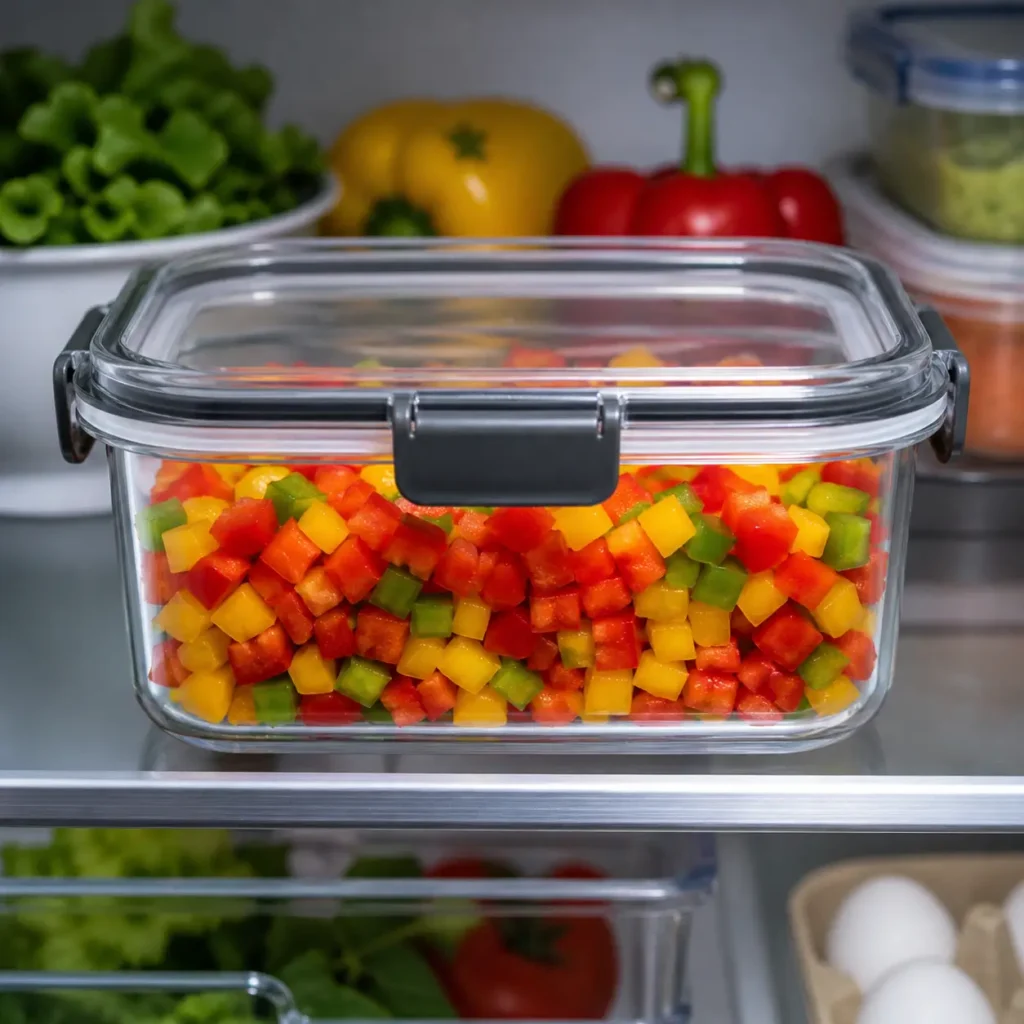
Best Ways to Store Diced Bell Peppers in the Refrigerator
After you dice a bell pepper, proper refrigeration is key.
Use Airtight Containers for Freshness
Place your diced bell peppers in a clean, airtight container. This prevents moisture loss and keeps them from absorbing odors from other foods.
Glass containers or high quality plastic containers both work well. Avoid leaving diced peppers exposed, as they will dry out quickly.
If you regularly practice how to dice a bell pepper for meal prep, investing in reliable storage containers will make a noticeable difference.
Add a Paper Towel for Moisture Control
Excess moisture can make diced bell peppers soggy.
Line the container with a dry paper towel before adding the peppers. This helps absorb moisture and keeps the texture crisp.
This small step enhances the results of your effort when learning how to dice a bell pepper.
Refrigeration Time Guidelines
Diced bell peppers stay fresh in the refrigerator for about three to four days.
After that, they may begin to soften and lose flavor. Always check for signs of spoilage before using them.
When you properly apply how to dice a bell pepper and store them correctly, you extend their usability without sacrificing quality.
Can You Freeze Diced Bell Peppers
Freezing is a great option if you want to store diced peppers for longer periods.
How to Freeze the Right Way
Spread the diced bell peppers in a single layer on a baking sheet and freeze them for about one hour. This prevents clumping.
Once frozen, transfer them to a freezer safe bag or container.
This method preserves the results of how to dice a bell pepper, keeping pieces separate and easy to use later.
How Freezing Affects Texture
Frozen bell peppers will be softer when thawed.
They are best used in cooked dishes such as soups, stews, and stir fries rather than fresh salads.
Even though texture changes, the flavor remains intact, making freezing a practical extension of your how to dice a bell pepper workflow.
Meal Prep Strategies Using Diced Bell Peppers
If you cook regularly, incorporating how to dice a bell pepper into your meal prep routine can save significant time.
Batch Prepping for the Week
Dice multiple bell peppers at once and store them in separate containers.
This allows you to quickly add them to meals without repeating the cutting process every day.
Consistency in size, achieved through proper how to dice a bell pepper, ensures they cook evenly across different recipes.
Mix with Other Prepped Vegetables
Combine diced bell peppers with onions, zucchini, or carrots for ready to cook vegetable blends.
This is especially useful for stir fries and sheet pan meals.
Your understanding of how to dice a bell pepper helps maintain uniformity across all ingredients.
Portion Control for Convenience
Divide diced peppers into portion sized containers.
This makes it easier to grab exactly what you need without measuring each time.
Efficient portioning is a natural extension of mastering how to dice a bell pepper in a practical kitchen setting.
Signs Your Diced Bell Peppers Are No Longer Fresh
Even when stored correctly, diced peppers do not last forever.
Look for these signs:
Soft or slimy texture
Dull or darkened color
Unpleasant odor
If you notice any of these, it is best to discard them.
Freshness is just as important as technique, and maintaining quality ensures that your effort in learning how to dice a bell pepper pays off in every dish.
Keeping Diced Bell Peppers Crisp Longer
If you want to maintain that fresh crunch after you dice a bell pepper, a few additional tips can help.
Store them at a consistent cold temperature and avoid frequent opening of the container.
Keep them away from high moisture foods in the fridge.
Only wash the peppers before cutting, not after dicing, to prevent excess water buildup.
These small habits enhance the results of how to dice a bell pepper and keep your ingredients in peak condition.
Expert Knife Skills to Master How to Dice a Bell Pepper
Mastering how to dice a bell pepper is not just about following steps. It is about refining your knife skills so the process becomes fast, precise, and second nature. Professional chefs rely on technique, consistency, and control rather than speed alone.
If you want to elevate how you approach how to dice a bell pepper, this section will help you move from basic execution to confident, efficient cutting.
Building Proper Knife Control for Better Results
Control is the foundation of mastering how to dice a bell pepper.
Use the Correct Grip
Hold your knife using a pinch grip. Place your thumb and index finger on the blade just in front of the handle, while the rest of your fingers wrap around the handle.
This grip gives you better stability and precision compared to holding only the handle.
When you improve your grip, every step of how to dice a bell pepper becomes smoother and more controlled.
Keep Your Guiding Hand Safe
Your non cutting hand should guide the pepper while protecting your fingers.
Curl your fingertips inward slightly, creating a barrier between your fingers and the blade. This is often called the claw grip.
This technique is essential when practicing how to dice a bell pepper safely and consistently.
Improving Speed Without Losing Precision
Speed comes naturally once your technique is solid.
Focus on Rhythm Instead of Rushing
When learning how to dice a bell pepper, aim for a steady rhythm rather than quick, uneven cuts.
A smooth motion produces cleaner results and reduces mistakes.
Use the Rocking Motion
Keep the tip of your knife in contact with the cutting board while lifting and lowering the handle.
This rocking motion is widely used in professional kitchens and makes how to dice a bell pepper faster and more efficient.
Maintaining Your Knife for Perfect Cuts
Even the best technique will fail without a properly maintained knife.
Keep Your Knife Sharp
A sharp knife slices cleanly through the pepper’s skin and flesh.
Dull knives require more force, increasing the risk of slipping and creating uneven pieces.
If you regularly practice how to dice a bell pepper, sharpening your knife will noticeably improve your results.
Choose the Right Knife Size
A standard chef’s knife, typically eight inches, is ideal.
It provides enough length for smooth cuts while remaining easy to control.
Using the right tool enhances every step of how to dice a bell pepper.
Advanced Techniques for Cleaner Dice
Once you are comfortable with the basics of how to dice a bell pepper, you can refine your approach further.
Stack and Slice Method
After flattening the pepper panels, stack a few pieces on top of each other.
Slice them into strips, then rotate and dice.
This method increases efficiency while maintaining uniformity, especially when you are confident in your control during how to dice a bell pepper.
Precision Alignment
Line up your strips carefully before dicing.
Even spacing between cuts ensures that each cube is consistent in size.
This level of attention is what separates average results from professional quality when mastering how to dice a bell pepper.
Common Skill Plateaus and How to Overcome Them
Many home cooks reach a point where their progress slows.
Uneven Cuts
If your pieces are inconsistent, slow down and focus on alignment.
Precision always comes before speed in how to dice a bell pepper.
Slipping or Loss of Control
Check your cutting board stability and knife sharpness.
A stable setup is essential for maintaining control.
Fatigue During Prep
If your hands tire quickly, adjust your grip and posture.
Efficient technique reduces strain and makes repeated practice of how to dice a bell pepper more comfortable.
Developing Consistency Through Practice
The key to mastering how to dice a bell pepper is repetition.
Practice regularly with different sizes and colors of peppers.
Focus on maintaining uniform cuts every time.
Over time, your movements will become automatic, and your results will consistently match professional standards.
Frequently Asked Questions About How to Dice a Bell Pepper
Do you need to peel a bell pepper before dicing?
No. The skin is completely edible and adds texture. When learning how to dice a bell pepper, you always keep the skin intact.
What is the easiest way to remove seeds?
The easiest method is to cut around the core instead of slicing through it. This keeps seeds contained and simplifies how to dice a bell pepper.
Can you dice a bell pepper without cutting off the top?
You can, but it is less efficient. Removing the top makes it easier to access the core and improves your workflow when practicing how to dice a bell pepper.
How small should diced bell peppers be?
It depends on the recipe. A quarter inch dice is standard, but smaller or larger cuts can be used depending on the dish.
Is it safe to eat bell pepper seeds?
Yes, they are safe, but they are slightly bitter. Most people remove them when learning how to dice a bell pepper for better flavor.
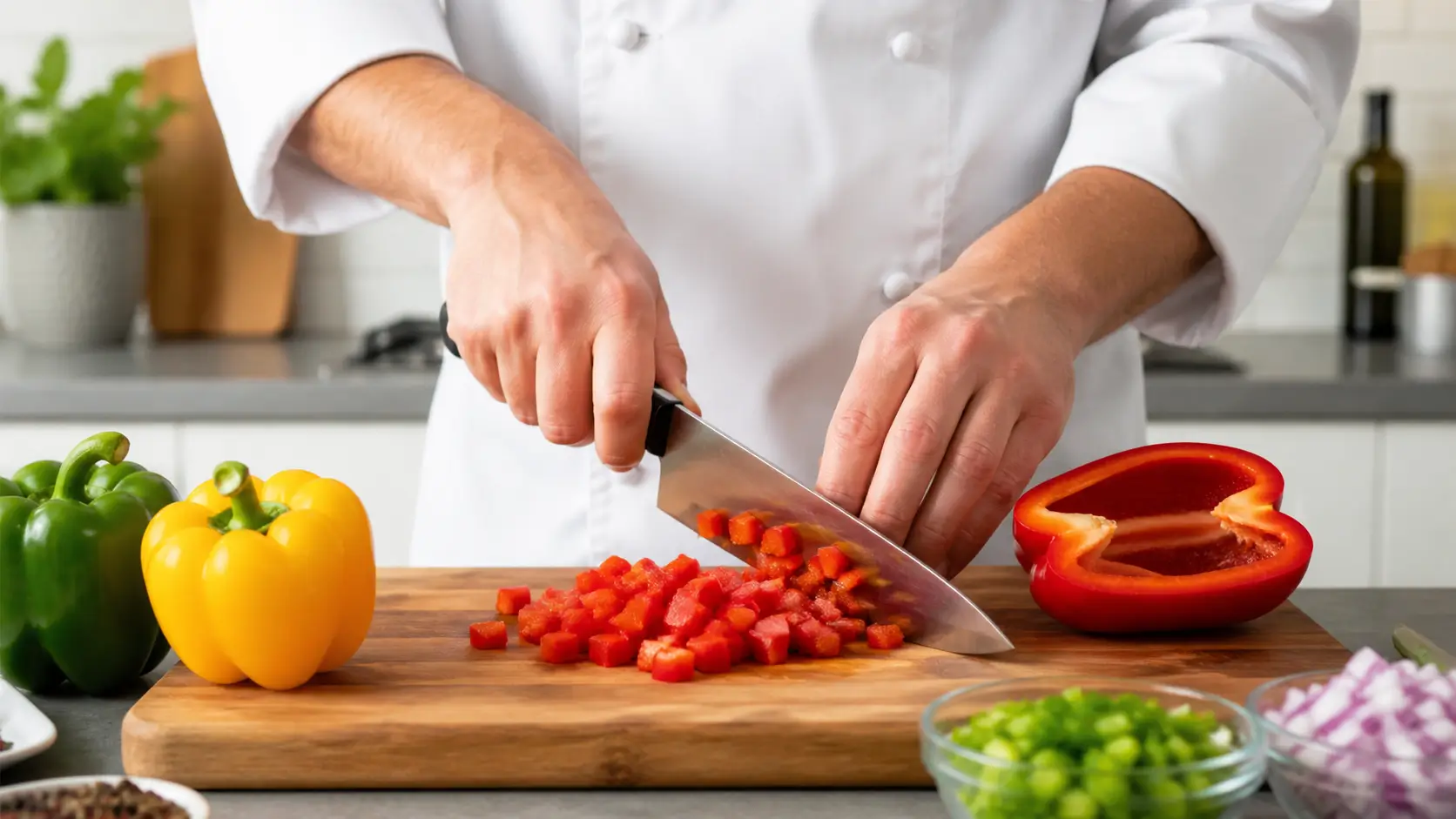
how to dice a bell pepper
Ingredients
Method
- Wash the bell pepper under cool running water and dry it thoroughly.
- Place the bell pepper upright on a stable cutting board.
- Slice off the top just below the stem, then slice off the bottom.
- Stand the pepper upright and cut down along the sides to separate the flesh from the core.
- Remove and discard the core, seeds, and white membranes.
- Lay each pepper piece flat on the cutting board, skin side down.
- Slice the flattened pieces into even strips.
- Rotate the strips and cut across them to create uniform diced cubes.
Notes
Flattening the pepper before slicing improves control and consistency.
Store diced bell peppers in an airtight container in the refrigerator for up to four days.